What can I eat?
Eating enough of the right foods in childhood is important to help you grow. This can be hard when your kidneys don't work very well, you feel sick and don't feel like eating. It's important to talk to your dietitian because they can help plan a special diet for you.
Please scroll down and read through the sections below to learn more.
Energy
Everyone needs energy from food to grow and be active. We get energy from calories in food. When a person is feeling unwell they may not be able to eat all the calories they need. This can lead to feeling tired and losing weight. To stay strong and growing, a person with CKD may need to include high calorie foods, drinks and additional snacks to get enough energy. Your dietitian will help you know what's best for you.
Protein
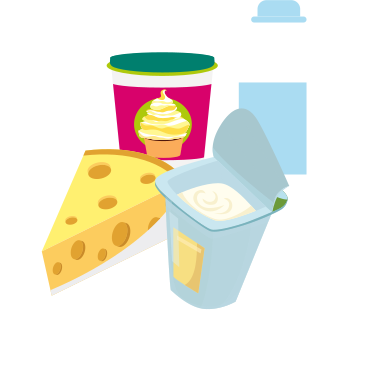
Protein is found in foods such as meat, fish, eggs, cheese, milk, yogurt, nuts and beans. It is important to eat enough protein to grow. But it is also important to not eat too much protein as this can make the kidneys work too hard. Your dietitian will tell you how much protein you need to eat.
Potassium
Potassium is a mineral we need from food to keep the heart beating and muscles working. If the kidneys are not working well, potassium in the body can rise too high. This is not healthy for the heart. Your dietitian will teach you what foods are low or high in potassium and how to decide which ones are best for you. For example, apples have less potassium than bananas, cucumbers have less potassium than tomatoes, and plain cookies have less potassium than chocolate.
Phosphate
Salt
Salt is in lots of foods. Eating too much salt can make your body hold on to too much water, which can make your legs swollen and uncomfortable. This is called edema. Your dietitian can teach you which foods have a lot of salt. For example, bacon, sausage and fast food are high in salt. Eating more homemade foods can help you eat less salt.
INTERESTING FACT:
Salt is also known as sodium on food labels.
Water
The kidneys help our bodies remove extra water that we don't need. When they are not working well water stays in the body. The extra water can make your legs swell and is bad for your heart. Your dietitian may tell you to limit how much you drink in a day.
Vitamin D and Calcium
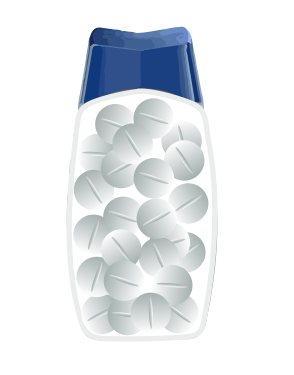
Calcium and Vitamin D work together as a team to keep your bones healthy. Vitamin D helps to get calcium from foods into your body. Vitamin D is a special Vitamin because it is in some foods but also is made in your skin when you spend time outside in the sun. The kidney helps Vitamin D do many jobs in the body. When the kidneys are not working well, the Vitamin D you get from food or the sun is not enough. That's why your dietitian may tell you to take a Vitamin D supplement like a gummy or pill.
Summary
Learning about food and nutrition is important. Knowing how to make good food choices can help you grow and to feel better so you can keep doing the things that you enjoy! Your dietitian is there to help you every step of the way.
Learn more:
Information sourced from:
National Kidney Foundation. KDOQI Clinical Practice Guideline for Nutrition in Children with CKD: 2008 Update. American Journal of Kidney Diseases. 2009;53(S2):S1-S124.
Royle J. Chapter 12: Kidney Disease. In: Shaw V, editor. Clinical Paediatric Dietetics. 4: John Wiley & Sons Ltd.; 2015. p. 242-81.
https://www.infokid.org.uk/
https://www.kidneyresearchuk.org/health-information/resources/the-kidneys-a-basic-guide